
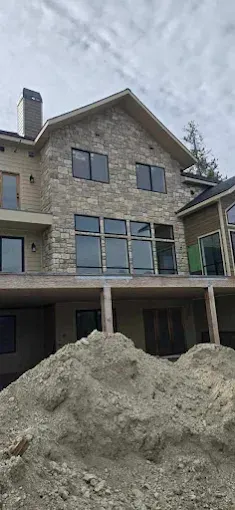

Facades Built for Idaho Weather Exposure
Exterior Stone Cladding in Nampa for properties where siding no longer delivers the durability or appearance owners expect
Idaho weather cycles between summer heat that cracks brittle surfaces and winter freeze-thaw patterns that push moisture behind failing cladding, creating conditions where vinyl warps and wood siding rots faster than anticipated. LBZ Construction, LLC installs exterior stone cladding on home facades, entryways, columns, and outdoor living spaces where stone's thermal stability and weather resistance outlast other materials without requiring the repainting or replacement cycles that wood and composite products demand. You select stone profiles that match your architectural style, and the installation creates a shell that sheds water, resists impact, and holds color through years of sun exposure without fading or peeling.
Stone cladding applications include full-facade coverage, lower-level wainscoting that protects high-splash zones, column wraps that add structural appearance to porch supports, and accent walls that break up long stretches of monotone siding. The system layers a weather-resistant barrier over sheathing, followed by metal lath and mortar that lock stone pieces into place with weep screeds at the base to drain any moisture that penetrates behind the veneer. Each stone piece gets mortared and grouted to prevent water intrusion, and corner details wrap without exposed edges that collect ice or allow wind-driven rain to penetrate.
Request an exterior stone cladding estimate to evaluate material options and identify which building surfaces benefit most from stone installation.
How Stone Cladding Handles Seasonal Exposure
Stone cladding installs over a drainage plane that allows any moisture reaching the wall cavity to exit through weep screeds rather than saturating the sheathing or framing. The mortar bed supporting each stone piece cures to a hardness that resists freeze-thaw damage, and the stone itself absorbs minimal water compared to porous brick or concrete block. Flashing integrates at transitions where stone meets rooflines, windows, or other cladding types, directing water away from vulnerable seams.
After installation, you notice facades that no longer require seasonal maintenance checks for peeling paint or split boards. Stone surfaces shed rain and snow without staining, the color remains stable under direct sun, and impact resistance increases compared to fiber cement or aluminum siding. Outdoor living spaces clad in stone handle barbecue heat and furniture scrapes without denting, and entryways framed in stone create curb appeal that reads as permanent architecture rather than applied decoration.
The installation timeline depends on square footage and design complexity, but most residential projects involve surface preparation that ensures proper substrate support before any stone touches the wall. LBZ Construction, LLC completes exterior stone cladding for both residential homes and light commercial properties throughout the Treasure Valley, working with natural stone that offers unique color variation and manufactured stone that delivers consistent profiles across large installations.
Common Property Owner Questions About Cladding
Western Idaho property owners ask how stone cladding compares to other siding materials and what installation involves before committing to facade upgrades.
What makes stone cladding more durable than traditional siding in Idaho's climate?
Stone does not rot, warp, or fade like organic materials, and it resists the freeze-thaw cycles and UV exposure common in Western Idaho without requiring the protective coatings that fail on other products.
How does exterior stone cladding attach to existing wall structures?
A weather-resistant barrier and metal lath fasten to the sheathing, followed by a mortar scratch coat that bonds the stone veneer, with proper flashing and weep screeds ensuring moisture drains away from the building envelope.
Why do some homes use stone only on lower sections rather than full-facade coverage?
Lower-level stone wainscoting protects high-splash zones from ground moisture and lawn irrigation while reducing material costs, and the visual weight of stone at the base anchors lighter siding materials above.
When should stone cladding replace existing siding versus being added as an accent?
Full replacement makes sense when existing siding has failed or when the design goal is complete transformation, while accent installations work for architectural emphasis on entries, gables, or specific walls without disturbing functional siding elsewhere.
What stone profiles work best for matching specific architectural styles?
Ledgestone and stacked stone suit modern and contemporary designs, river rock complements rustic or craftsman styles, and traditional cut stone aligns with colonial or formal architecture.
LBZ Construction, LLC evaluates your existing wall structure and recommends stone types based on project goals and budget parameters. Contact us to schedule a site assessment and review material samples selected for Idaho weather performance.