
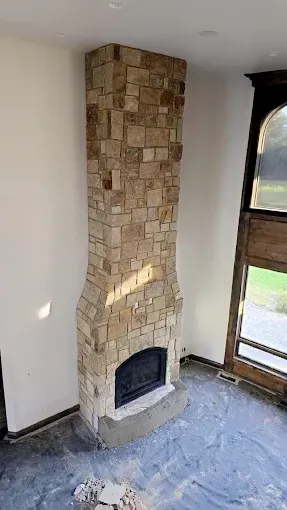

Fireplaces That Command Room Attention Immediately
Stone Fireplace Installation in Nampa for homes needing a visual anchor stronger than furniture or paint
A fireplace surrounded by drywall blends into the wall and disappears behind furniture, but stone fireplace installation creates a focal point that pulls attention from the doorway and organizes seating arrangements around a structure that feels permanent. LBZ Construction, LLC builds custom stone fireplace surrounds, floor-to-ceiling stonework, and fireplace enhancement projects throughout Nampa where homeowners want masonry that defines the room's character rather than fading into the background. Stone selection ranges from smooth stacked ledgestone that reads modern to rough river rock that reinforces rustic themes, and the installation extends as high and wide as the design requires to balance the fireplace opening with the overall wall proportions.
The process starts by protecting the firebox and surrounding floors, then installing a mortar bed and lath system that supports the stone's weight without transferring stress to the drywall. Each stone piece is placed to maintain consistent joint spacing and aligned edges, with corner wraps and capstones finishing transitions where stone meets other materials. Fireplace mantels integrate into the stonework or mount over it depending on design preference, and hearth extensions in matching or contrasting stone complete the base.
Arrange a consultation to review stone samples and discuss fireplace surround dimensions that fit your room layout and design direction.
What Proper Fireplace Stonework Requires
Fireplaces generate heat that expands materials and creates stress at mortar joints, so stone installation uses heat-resistant mortar and allows for expansion gaps where stone meets the firebox opening. The mortar bed must cure fully before grouting to prevent cracking, and grout joints are tooled to a depth that sheds debris without creating ledges where soot accumulates. Stonework extending to the ceiling requires adequate structural support beneath the hearth and careful weight distribution to avoid loading drywall seams.
Once the installation is complete and the grout has cured, you notice stonework that frames the fire and adds thermal mass that absorbs and radiates heat after the flames die down. The fireplace becomes the room's organizing element, and the stone texture changes how light moves across the wall throughout the day. Mantels display décor against a stone backdrop that doesn't compete visually, and the surround handles direct heat exposure without discoloration or cracking that would require repair.
LBZ Construction, LLC installs both natural and manufactured stone based on weight requirements and aesthetic goals, with manufactured stone offering lighter profiles that install faster on standard framing. Projects include gas fireplace surrounds where heat output is lower and wood-burning fireplace installations where stone must handle sustained high temperatures, and design styles range from minimalist single-stone profiles to full-wall compositions that incorporate shelving and media niches.
Answers to Frequent Fireplace Stonework Questions
Homeowners in Nampa ask about stone selection, installation methods, and design options before committing to fireplace remodeling projects.
What determines whether a fireplace surround should extend to the ceiling or stop lower?
Ceiling-height stonework creates dramatic vertical emphasis and works well in rooms with high ceilings or two-story spaces, while partial-height surrounds with a defined cap or mantel suit standard ceiling heights and allow wall space above for artwork or windows.
How does stone choice affect fireplace heat performance and maintenance?
Natural stone with high thermal mass absorbs and radiates heat longer after the fire burns down, while lighter manufactured stone heats and cools faster but simplifies installation on walls without structural reinforcement.
Why do some fireplace designs use contrasting stone on the hearth versus the surround?
Contrasting hearth stone visually grounds the fireplace and protects high-traffic floor areas with more durable material, while matching stone throughout creates a unified appearance that emphasizes the overall composition.
When should stonework wrap the corners beside a fireplace rather than stopping at the opening edges?
Corner wraps eliminate visible drywall transitions and make the fireplace feel like a built-in architectural element rather than an applied feature, especially effective when the fireplace sits on an exterior wall or in a room corner.
What installation details prevent smoke staining on stone surfaces above the firebox?
Properly sized fireboxes with correct damper operation and adequate chimney draft prevent smoke spillage, while sealed stone surfaces resist staining and clean easily if soot does accumulate during use.
LBZ Construction, LLC uses detailed stone placement and clean finishing techniques around fireplace installations to improve comfort, appearance, and overall home value. Request a fireplace remodeling estimate to explore stone options and discuss design layouts tailored to your space.